

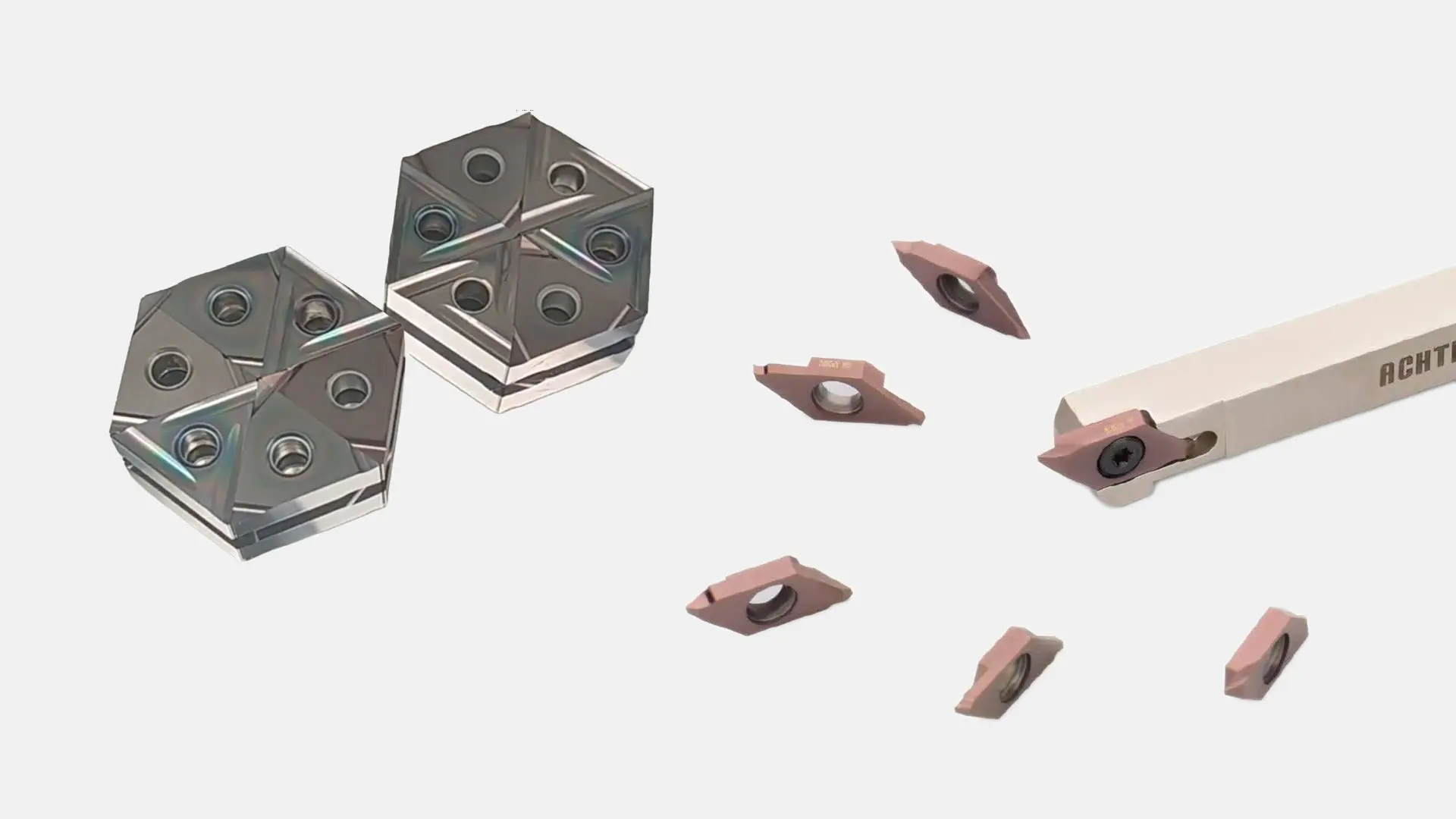
Ceramic inserts can cut much faster than carbide, but only when the workpiece and setup suit their low toughness. Buyers asking what are ceramic inserts good for need to identify the material, hardness, operation, machine rigidity, and cut continuity before choosing a grade.
Buyers should focus on five proven ceramic applications, then verify grade-to-material matching and screen for conditions where ceramic fails. Alumina, silicon nitride, SiAlON, and whisker-reinforced ceramics behave differently. The holder, edge preparation, coolant plan, and programmed toolpath must support the chosen material.
Key Takeaways
- Best Materials: Ceramic inserts suit cast iron, hardened steel, hard stainless steel, nickel superalloys, and clad surfaces.
- Stable Cuts: Rigid machines, secure clamping, and controlled engagement reduce the chipping risk created by ceramic’s low toughness.
- Grade Matters: Alumina, silicon nitride, SiAlON, and whisker ceramics serve different materials and specific thermal conditions.
- Avoid Blind Swaps: Existing carbide holders, coolant routines, and cutting data may not support a ceramic insert safely.
What Are Ceramic Inserts Good For?
Ceramic cutting inserts are best for high-speed machining of hard, abrasive, or heat-resistant workpieces under stable conditions. They retain hardness at temperatures that quickly wear a carbide edge, so they can raise cutting speed in the right application. Their low fracture toughness makes them less forgiving of vibration, weak clamping, sudden impact, and poorly controlled entry. ISCAR identifies cast iron, hardened steel, and nickel-based superalloys as suitable materials when the machine and workholding are rigid (Turning Inserts for Machining Hard Materials, ISCAR).
| Check Before Buying | Good Fit for Ceramic | Stick to Carbide / CBN |
|---|---|---|
| Workpiece Material | Cast iron, hardened steel (>45 HRC), or Inconel | Soft steel, aluminum, or titanium |
| Cut Type | Continuous cuts (smooth outer turning) | Heavy interrupted cuts (slots, cross-holes, heavy scale) |
| Machine Setup | Rigid machine, short tool overhang, tight clamping | Vibration/chatter, long tool overhang, thin-walled parts |
| Batch Size | Medium-to-high volume (need faster cycle times) | One-off or small batch (no time to test parameters) |
| Machining Program | High-speed program with ceramic-specific holders | Using existing carbide speeds, feeds, and holders directly |
Ceramic is an application-specific choice, not a general replacement for carbide. Before ordering, record the material grade and hardness, operation, current insert and holder, cutting speed, feed, depth of cut, coolant method, and failure mode. CarbideMatch can use these details in its application-matching process to review suitable insert materials and compatible tooling.
Top 5 Applications for Ceramic Cutting Inserts
Five applications account for the most useful production cases documented in manufacturer guidance and machining references. Each one depends on stable workholding and a ceramic grade made for the workpiece material.
| Application | Typical workpiece | Suitable ceramic family | Main process advantage |
|---|---|---|---|
| High-speed cast-iron machining | Gray, nodular, and selected hard cast irons | Silicon nitride or alumina | High cutting speed and wear resistance |
| Hard turning after heat treatment | Hardened gears, shafts, races, and dies | Mixed or coated alumina | Finishing hard surfaces on a lathe |
| Nickel-superalloy rough turning | Inconel, Waspaloy, and similar HRSA parts | SiAlON or whisker ceramic | High-temperature material removal |
| Ceramic milling of HRSA components | Aerospace and energy components | SiAlON or whisker ceramic | High-speed rough milling |
| Hard stainless and clad surfaces | Hardened stainless, Inconel cladding, and Stellite | Application-specific reinforced ceramic | Cutting abrasive or heat-resistant layers |
Do not approve a ceramic grade from the application name alone. The same material can require a different edge preparation, insert shape, coolant strategy, or toolpath when hardness, scale, interruption, or available machine power changes.
1. High-Speed Turning and Milling of Cast Iron
Cast iron is one of the broadest ceramic-insert applications. Silicon nitride ceramics combine wear resistance with better toughness and thermal-shock resistance than traditional alumina. Alumina grades can also finish gray cast iron at high speed. Kyocera recommends ceramic inserts for rough-to-finish turning of cast iron and notes that silicon nitride can machine cast iron with coolant because of its thermal-shock resistance (Ceramic Insert Grades, Kyocera).
Common parts include brake discs, cylinder liners, housings, and other high-volume cast components. The setup still needs firm clamping and a strong insert shape. Scale, casting skin, or voids can change the cut from stable to interrupted, so the selected grade and edge preparation must tolerate the actual surface condition.
2. Hard Turning of Hardened Steel
Mixed alumina ceramics, often based on aluminum oxide with titanium carbide, are used for continuous finishing and selected light interruptions in hardened steel. Hard turning commonly starts above about 45 HRC, while many production parts fall in the 55 to 65 HRC range. Typical work includes gears, bearing races, shafts, bushings, dies, and molds (Turning Inserts for Machining Hard Materials, ISCAR).
Ceramic can reduce or replace a grinding step when the part, tolerance, and finish permit turning after heat treatment. CBN remains a strong alternative for demanding finish control or heavier interruption. Carbide may be safer for roughing, unstable parts, or cuts that repeatedly cross holes, keyways, or splines.
3. Rough Turning of Nickel-Based Superalloys
SiAlON and whisker-reinforced ceramics are used for rough turning heat-resistant superalloys such as Inconel and Waspaloy. These materials hold heat near the cutting edge and can create severe notch wear. Ceramic grades use that heat to support high-speed cutting, but they require steady engagement and carefully planned entry and exit.
Sandvik’s application guidance distinguishes SiAlON from whisker ceramics for HRSA work and recommends strong round or square shapes, an entering angle near 45 degrees, and controlled toolpaths to limit notching (Application Guide, Sandvik Coromant). Submit the exact alloy, stock condition, operation, and existing failure pattern before selecting either family.
4. High-Speed Milling of Heat-Resistant Alloys
Ceramic milling removes large volumes of heat-resistant alloy from rigid aerospace and energy components. Unlike continuous turning, milling forces the insert to leave and reenter the cut. The cutter path should keep engagement as consistent as possible, while the machine and holder must support the required spindle speed and power.
Dry cutting is common because repeated heating and cooling can crack a hot ceramic edge. Industrial Equipment News reports typical ceramic milling speeds of 2,000 to 4,000 SFM for high-temperature alloys, but the correct value depends on the alloy, grade, cutter, engagement, and machine (Machining with Ceramic Inserts, Industrial Equipment News). Treat published speeds as application data to verify, not as a universal starting program.
5. Machining Hard Stainless and Clad Surfaces
Ceramic inserts can machine hardened stainless steels and welded or clad layers such as Inconel 625 and Stellite when the surface and setup are stable. Industrial Equipment News lists stainless steel above 35 HRC among suitable ceramic applications, while Cutwel identifies welded and clad heat-resistant materials as candidates for modern ceramic tooling (Machining with Ceramic Inserts, Industrial Equipment News; Benefits of Ceramic Turning or Milling Inserts, Cutwel).
Weld deposits can contain uneven hardness, scale, voids, or interrupted areas that chip a brittle edge. A reinforced ceramic does not remove that risk. Buyers should provide a description of the deposit, hardness range, allowance, interruptions, and current insert damage before approving a trial.
Match the Ceramic Grade to the Application
Ceramic is a group of cutting materials rather than one universal grade. Composition changes toughness, chemical stability, wear behavior, and resistance to thermal shock. Use this selection map with the manufacturer’s grade chart.
| Ceramic family | Common composition | Strong application direction | Main limitation |
|---|---|---|---|
| White alumina | Al2O3 | High-speed finishing of cast iron | Lower toughness and thermal-shock resistance |
| Mixed or black ceramic | Al2O3 plus TiC or TiCN | Hardened steel and selected cast iron | Needs stable engagement |
| Silicon nitride | Si3N4 based | Cast-iron roughing and finishing | Limited suitability for steel because of wear mechanisms |
| SiAlON | Silicon, aluminum, oxygen, and nitrogen | Nickel-based heat-resistant alloys | Application window depends on alloy and cut |
| Whisker-reinforced ceramic | Alumina with SiC whiskers | Roughing nickel alloys and difficult clad materials | Higher cost and application-specific coolant practice |
Edge preparation matters alongside composition. A chamfer, T-land, hone, or combined preparation strengthens the edge, but a larger land also raises cutting force. Round and square inserts provide more carbide-like support behind the edge than narrow diamond shapes. Check that the selected insert fits the holder, clamp, seat, and required approach angle before requesting a quote through the CarbideMatch insert catalog.
When Ceramic Inserts Are the Wrong Choice
Carbide, cermet, or CBN may be safer when the cut cannot maintain the heat and stability ceramic needs. Ceramic inserts are poor candidates for a flexible machine, weak workholding, heavy impact, or an application with no room for controlled trials.
- Avoid ceramic for soft steels, aluminum, and most titanium applications unless a grade maker specifically approves the case.
- Do not use a worn holder or a pocket that allows the brittle insert to move under load.
- Treat holes, keyways, weld gaps, heavy scale, and irregular stock as interruptions that need a tougher grade or toolpath.
- Do not copy carbide speeds, feeds, edge preparation, or coolant practice into a ceramic program.
- Avoid intermittent coolant flow because rapid temperature changes can cause thermal cracking.
- Confirm spindle speed, power, balance, guarding, and chip containment before high-speed ceramic milling.
A rejected ceramic application is not a failed purchasing decision. It prevents broken edges, damaged parts, and wasted trials. Send CarbideMatch the insert or holder code, workpiece material and hardness, operation, cutting parameters, coolant method, failure photos, and required quantity through the contact form for an application review.
Frequently Asked Questions
Are Ceramic Inserts Better Than Carbide Inserts?
Ceramic inserts are better only in suitable high-speed applications involving hard, abrasive, or heat-resistant materials. Carbide is tougher and covers a wider range of materials, machines, and interrupted cuts.
Can Ceramic Inserts Cut Hardened Steel?
Yes, mixed alumina ceramics can finish many hardened steels under stable conditions. The part hardness, interruption level, surface-finish target, and machine rigidity determine whether ceramic, CBN, or carbide is the safer choice.
Can Ceramic Inserts Machine Cast Iron?
Yes, cast iron is a major ceramic-insert application. Alumina suits high-speed finishing, while silicon nitride grades provide greater toughness for many roughing and finishing operations.
Can Ceramic Inserts Machine Inconel?
Yes, SiAlON and whisker-reinforced ceramics can rough-turn or mill selected Inconel grades at high speed. The process needs controlled engagement, a suitable edge preparation, and application-specific coolant practice.
Should Ceramic Inserts Run Dry?
Often, but not always. Cast-iron and hardened-steel applications commonly run dry, especially in milling. Some SiAlON, whisker, and newer turning grades may use coolant when the manufacturer approves a consistent delivery method.
Do Ceramic Inserts Fit Standard Carbide Holders?
Some ceramic inserts share ISO shapes and sizes with carbide inserts, but physical fit does not confirm safe clamping or correct geometry. Check the insert style, seat, clamp, rake angles, and holder condition before use.
Why Do Ceramic Inserts Chip or Break?
Ceramic inserts often fail from vibration, insert movement, heavy interruption, poor entry, excessive load, weak edge preparation, or thermal shock. Inspect the setup and failure pattern before changing only the grade.
Conclusion
Ceramic inserts earn their place when heat, hardness, and production volume overwhelm carbide. The five strongest applications are cast-iron machining, hard turning, nickel-superalloy roughing, ceramic milling, and cutting hard stainless or clad surfaces. If you began by asking, “What are ceramic inserts good for?” you can now screen the material, cut continuity, machine rigidity, ceramic family, and coolant plan before approving a trial.
Send CarbideMatch your workpiece grade and hardness, operation, insert or holder code, cutting data, coolant method, failure photos, and required quantity. You will receive an application review for material matching, compatibility checks, availability, samples, and quotation options.